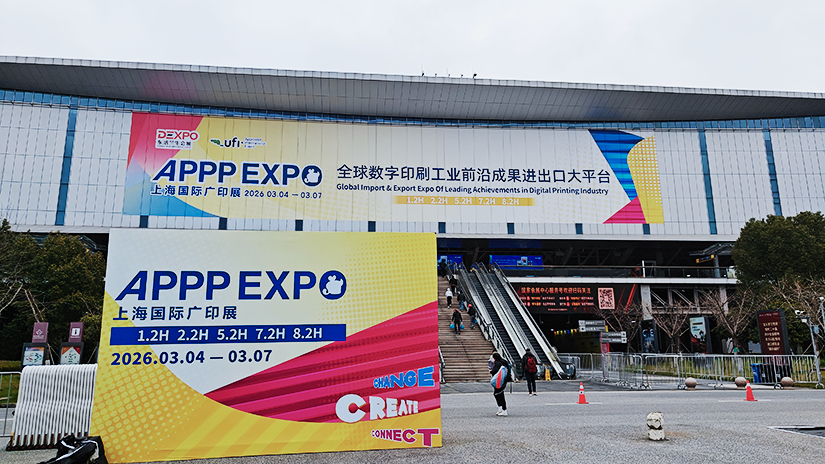
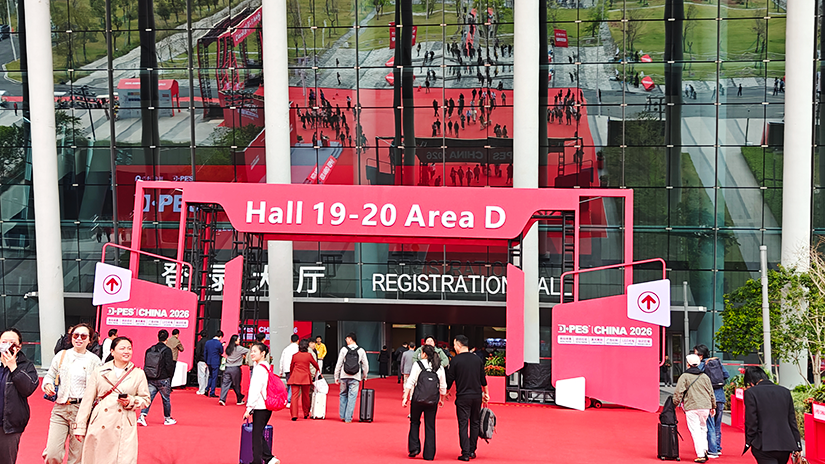
It is evident from the 2026 APPP and DPES , two iconic industry events, that China’s digital printing industry is accelerating towards a high-quality development stage, with four core trends becoming increasingly clear: environmental protection, scenario-based application, intelligence, and stratification. Traditional solvent-based equipment is rapidly exiting the market, while green and scenario-oriented tracks such as UV printing, sublimation, textile printing, packaging, and labeling have become the industry mainstream. Enterprises of different sizes have shown distinct differentiation in their strategic layouts and product choices, and the industry competition pattern has become increasingly mature. As a core consumable for digital printing, the R&D level and product quality of ink directly determine printing effects and the pace of industry upgrading. COBO is deeply engaged in this field, focusing on the R&D, production, and sales of ink, providing core support for the green and efficient development of the industry.
I. Market Positioning: Dual Drive of Environmental Protection and Scenarios, Accelerated Marginalization of Solvent-Based Equipment
1. Ink and Technology: From “Solvent Dependence” to “Green and Diversified Upgrade”
Green printing technologies such as UV, Eco solvent, and sublimation have fully dominated the market, and traditional solvent-based large-format printers are barely visible at the two exhibitions. Among them, UV printing (including flatbed, roll-to-roll, and hybrid flatbed-roll models), Eco solvent printing, sublimation printing, and direct textile printing (DTF/DTG) technologies have become absolute mainstreams. With the advantages of environmental protection, high efficiency, and wide adaptability, they fully cover all application scenarios such as advertising, signage, decoration, clothing, and packaging, completely breaking the monopoly of traditional solvent-based technologies.
As an enterprise focusing on the R&D, production, and sales of ink, COBO keeps pace with the industry’s green upgrading trend. Its independently developed and produced UV ink, Eco solvent ink, sublimation ink and other products are accurately adapted to the current mainstream printing technologies, balancing environmental compliance and printing quality, and have become one of the core consumable brands concerned by many equipment manufacturers and terminal enterprises at the exhibitions.
2. Application Scenarios: From “Single Advertising” to “Full Industrial Penetration”
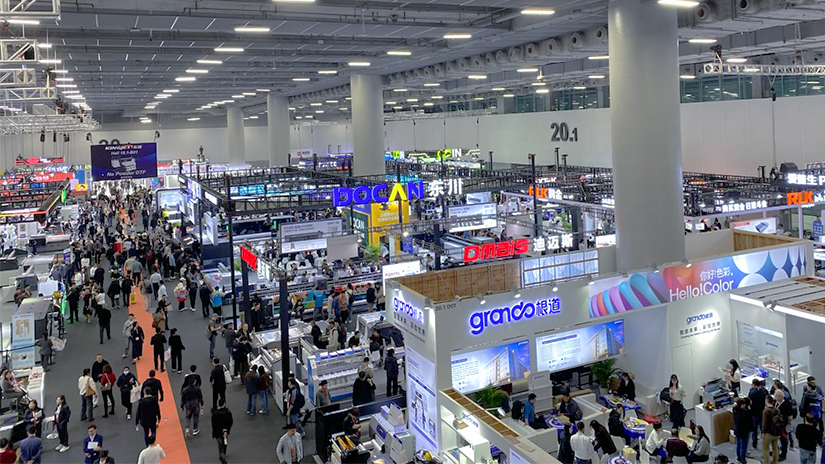
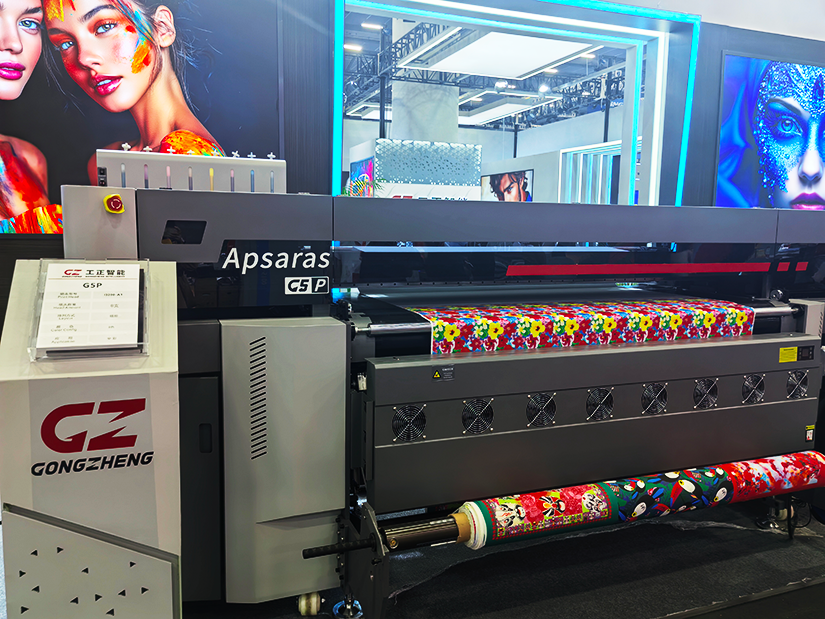
Although the textile printing track still has room for segmented growth, the overall digital textile market has tended to be saturated, a situation reflected in both exhibitions. DPES specially set up a textile printing pavilion, where various textile printing equipment such as sublimation, DTF, and direct injection machines were densely displayed. These equipment can accurately meet the diverse needs of sportswear, home textiles, and personalized customization, and remain a highly concerned segmented field at the exhibitions. It is worth noting that affected by factors such as market saturation and capacity demand adaptation, the focus of industry competition has shifted from “incremental competition” to “cost-performance and adaptability competition”. The configuration of sublimation machines also meets the actual market needs — currently, the best-selling and most market-share models are not high-end multi-head machines, with machines with more than 24 heads having extremely low popularity.Most enterprises prefer to deploy 8-head, 12-head, or 15-head sublimation printers. These models balance capacity and cost, and can accurately match the current market demand for small-batch and diversified production, which not only conforms to the actual investment budget of most enterprises, but also meets the needs of terminal customization and regular mass production. However, some enterprises also launched sublimation printers with more than 30 heads at the two exhibitions. These models focus on high-end, high-speed, and large-capacity, targeting a small number of leading customers with large-scale mass production needs.Although they have not become the market mainstream, they also show the technological R&D breakthroughs of some enterprises and their intention to layout the high-end segmented market, forming a complement to the mainstream cost-effective models and jointly presenting the diversified development trend of the digital textile industry in a saturated market. For the textile printing scenario, COBO has specially developed special inks suitable for sublimation, DTF, and direct injection technologies, helping enterprises improve printing efficiency and color performance, and adapt to the production needs of enterprises of different sizes.
The digital transformation of the packaging and labeling field is accelerating. Both APPP and DPES have focused on strengthening the digital packaging and labeling exhibition areas. High-speed inkjet, variable data printing, online printing modules and other equipment are widely adapted to industrial packaging scenarios such as food, daily chemicals, and pharmaceuticals. With the advantages of flexibility and high efficiency, they are gradually replacing traditional flexo and offset printing technologies, becoming the core support for the digital upgrading of the packaging industry. Based on the packaging and labeling segmented scenarios, the special inkjet inks developed and produced by COBO have the advantages of bright colors, strong adhesion, and environmental compliance, adapting to high-speed printing needs and helping the packaging and labeling industry achieve digital and green transformation.
The demand for special material printing and customization continues to rise. Technologies such as high-drop UV printing (25–30mm), visual printing, cylindrical/special-shaped printing, 3D embossing, and varnish/gilding enhancement have become standard configurations for equipment, successfully expanding to non-advertising scenarios such as building materials, home furnishing, cultural and creative industries, and industrial parts, promoting the transformation of digital printing from “advertising auxiliary” to “full-scenario empowerment”. In response to such special process needs, COBO has optimized ink formulas and launched special inks suitable for high-drop, 3D embossing, varnish enhancement and other processes, balancing adhesion and three-dimensional effect to meet the printing needs of various special materials.
II. Product Selection: Large Enterprises Focus on “Scale and Strength”, SMEs Focus on “Specialization and Refinement”, with a Solidified Stratified Competition Pattern
1. Leading Enterprises: Focus on Large-Scale, High-Speed, Automated, and Integrated Development to Seize the High-End Market
Multi-head, large-format, and high-capacity have become the core competitiveness of leading enterprises. 3.2m, 5m, 6.6m UV roll-to-roll machines and 3.1×1.6m large-format flatbed machines have become standard configurations at the exhibitions. The capacity of some equipment exceeds 200㎡/h, and there are also models such as 16-head Eco solvent machines, which can efficiently meet the needs of large-volume orders such as outdoor advertising, large-scale exhibitions, and architectural decoration. Functions such as UV double-sided printing have also become common configurations of leading models, demonstrating the technological advantages and capacity layout of leading enterprises in the high-end equipment field. To meet the high-end equipment needs of leading enterprises, COBO provides customized ink solutions. Its independently developed high-capacity and high-stability UV ink and Eco solvent ink can adapt to the high-speed printing needs of multi-head and large-format equipment, ensuring the stability and color consistency of long-term continuous production, and has become an important consumable partner of leading equipment manufacturers.
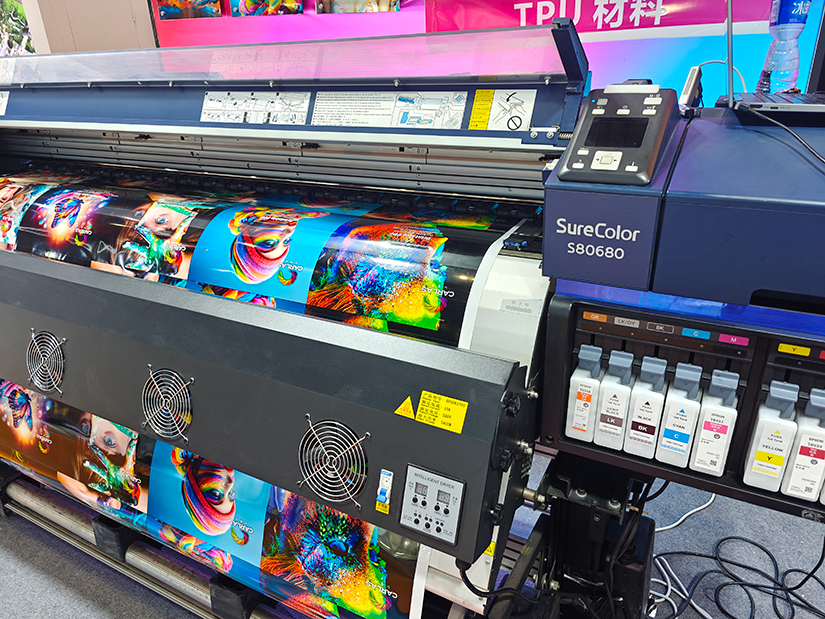
The level of automation and intelligence continues to upgrade. Functions such as linear motor, magnetic levitation drive, automatic edge tracing, automatic loading and unloading, and online color calibration are widely used. AI intelligent adaptation technology can match more than 300 materials in 0.01 seconds, and unmanned production lines have become the core selling point of leading enterprises, greatly improving production efficiency and reducing labor costs. Keeping pace with the intelligent trend, COBO has optimized the compatibility and adaptability of inks, ensuring that inks can seamlessly connect with various intelligent printing equipment, and further improving production efficiency in conjunction with the automated and intelligent functions of the equipment.
Total solution has become the key for leading enterprises to bind customers. From printing equipment, special ink, and operating software to supporting services such as post-processing cutting, laminating, and gilding, one-stop delivery solutions are provided to accurately match the large-scale and standardized production needs of large factories and well-known brand customers. As an integrated enterprise engaged in ink R&D, production, and sales, COBO can deeply integrate into the total solutions of leading enterprises, providing full-chain services from ink supply to after-sales technical support, helping leading enterprises improve the competitiveness of their solutions.
2. SMEs: Deeply Cultivate Small and Medium-Sized UV, Special Processes, and Segmented Scenarios to Create Differentiated Advantages
Small and medium-sized UV equipment has become the main layout direction for SMEs. Mainstream format UV flatbed and roll-to-roll machines such as 6090, 9060, 1612, and 2513, with the characteristics of high cost-performance and flexibility, accurately adapt to small-batch production and personalized customization orders, meeting the diverse needs of small and medium-sized customers. Taking into account the cost-performance needs of SMEs, COBO has launched cost-effective series of inks such as UV and Eco solvent. While ensuring printing quality, it reasonably controls ink costs, helping SMEs reduce production investment and improve market competitiveness.
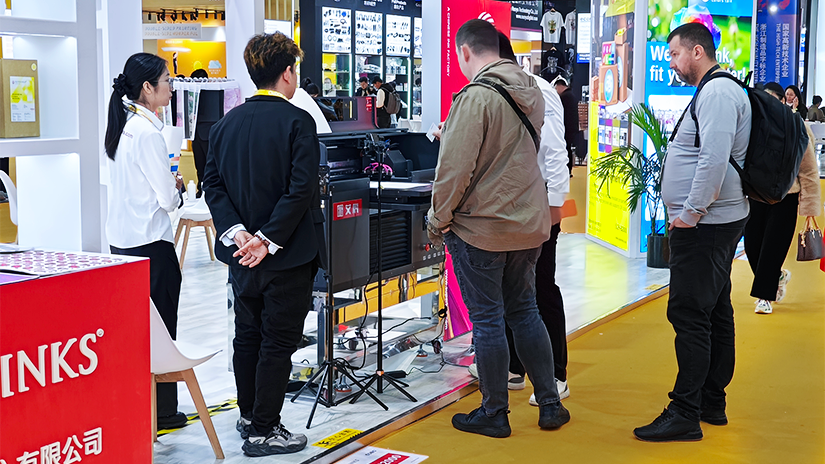
Special processes have become the core moat for SMEs. Differentiated processes such as high-drop printing, cylindrical/special-shaped printing, crystal label production, texture art printing, 3D embossing, and varnish enhancement help SMEs avoid direct competition with leading enterprises, accurately enter segmented tracks, and create unique competitive advantages. For various special processes, COBO provides special ink products and technical guidance, helping SMEs quickly grasp the core points of differentiated processes and improve the added value of printed products relying on high-quality inks. Total solutions for segmented scenarios have become the key for SMEs to improve customer stickiness. Focusing on vertical fields such as labeling, packaging, clothing customization, cultural and creative industries, and industrial signage, they provide a full closed-loop service of “equipment + consumables + process guidance + after-sales guarantee”, accurately matching the personalized and refined needs of segmented scenarios to achieve steady development. Based on the needs of SMEs in segmented scenarios, COBO provides special inks suitable for different vertical fields, and at the same time supports a complete sales and after-sales system, providing timely technical support for SMEs to help them improve the full closed-loop service.